
Tired of cheap horror movies blasting your eardrums with a screeching violin every time a stray cat jumps out of a cabinet? You are not alone. The scariest films rarely scream at you; instead, they whisper uncomfortable truths, lock you in claustrophobic rooms, and let existential dread tighten around your chest. If you want pure psychological terror that follows you to bed long after the credits roll, Netflix and Hulu currently host some of the finest slow-burn nightmares ever produced.
What You Need to Know
- Zero Cheap Tactics: These titles swap cliché spring-loaded jump scares for atmospheric tension, audio dissonance, and existential panic.
- Streaming Distribution: Four masterworks are available on Netflix and four can be streamed instantly on Hulu.
- Top Themes: Religious delusion, isolation, toxic grief, identity dissociation, and cosmic dread dominate this curated selection.
- Critical Acclaim: Each title holds impressive critical scores according to Rotten Tomatoes audience ratings and indie critics alike.
The Psychology of Pure Dread vs. Jump Scares
Mainstream Hollywood horror often relies on the startle reflex—an autonomic physiological reaction triggered by sudden motion and loud audio spikes. While it gets your heart racing for three seconds, it evaporates instantly. Psychological dread, by contrast, operates on anticipation. It forces your brain to calculate horrifying outcomes before they materialize on screen.
At MR Digital Media, our entertainment desk tracks cinema trends, and viewers are increasingly abandoning sensory-assault slashers in favor of cerebral stories that examine trauma, isolation, and paranoia. The following eight movies respect your intelligence while systematically dismantling your peace of mind.
1. I’m Thinking of Ending Things (Netflix)
Directed by Charlie Kaufman, this adaptation of Iain Reid’s novel is a surreal descent into memory, regret, and impending mortality. A young woman travels with her new boyfriend to his parents’ secluded farm during a blinding snowstorm. What begins as an awkward family dinner rapidly warps into an unhinged breakdown of linear time.
The terror does not come from a monster in the closet; it stems from the agonizing sensation that reality itself is slipping through the characters’ fingers. The dialogue feels slightly off-kilter, the farmhouse changes wallpaper between cuts, and the suffocating feeling of a life unlived hangs heavily over every frame.
2. The Lodge (Hulu)
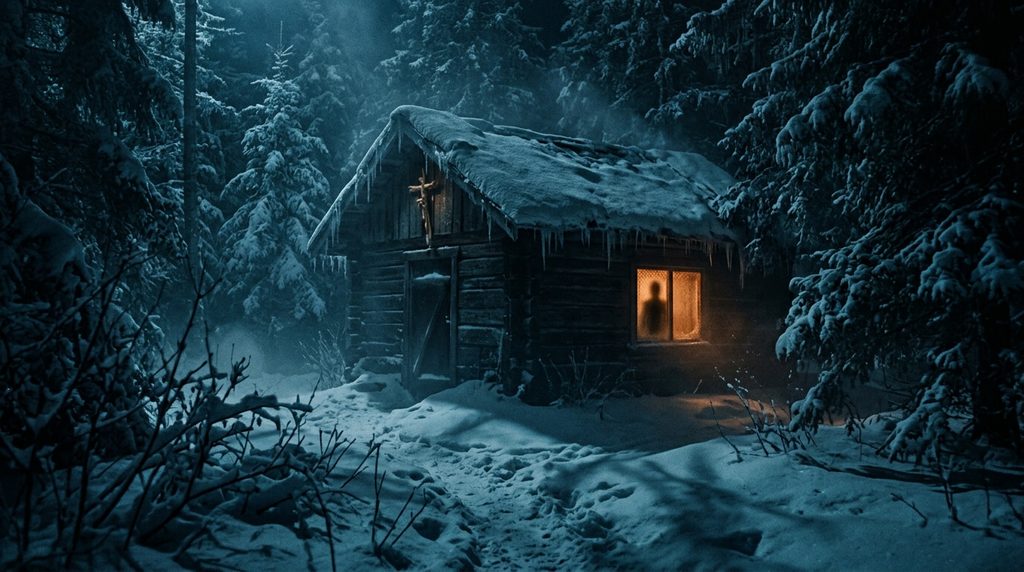
Directed by Severin Fiala and Veronika Franz, The Lodge is an exercise in arctic isolation and psychological warfare. Two children are stranded in a remote, snowed-in winter cabin alongside their father’s new fiancée, Grace—the sole survivor of an extremist suicide cult. When mysterious incidents cause their supplies and power to disappear, Grace’s fragile mental stability fractures.
The film uses cold natural lighting, echoing hallways, and ominous religious iconography to turn the house into an emotional purgatory. It leaves viewers questioning whether supernatural forces are at play or if the human psyche is simply devouring itself in the dark.
3. Creep (Netflix)
Found-footage horror often gets a bad reputation, but Patrick Brice and Mark Duplass crafted a masterclass in social awkwardness weaponized as psychological terror. A videographer answers a Craigslist ad to document the final days of an eccentric dying man named Josef. However, Josef’s behavior steadily crosses every boundary of normal human etiquette.
What makes Creep so deeply disturbing is how relatable the protagonist’s dilemma feels. We have all stayed in uncomfortable situations out of politeness. The movie taps directly into the terror of being trapped with a predator while trying desperately not to seem rude.
4. Saint Maud (Hulu)
Rose Glass’s debut feature is a blistering look at religious fanaticism, trauma, and loneliness. Maud, an isolated hospice nurse who converted to strict Catholicism following an unspoken hospital tragedy, becomes obsessed with saving the soul of her terminally ill patient, a bohemian former dancer.
Rather than using loud bangs, Saint Maud utilizes sickening low-frequency rumble, uncanny sound design, and Morfydd Clark’s raw, unblinking performance. The ending delivers one of the most devastating, split-second tonal shifts in modern cinema history.
- Relies on natural character choices and realistic psychological deterioration.
- Employs subtle, unsettling audio landscapes rather than jarring sound stingers.
- Rewards repeat viewings with hidden background details and symbolic clues.
- These are slow-burn narratives; viewers wanting fast-paced slasher action may lose patience.
- Themes include heavy grief, clinical depression, self-harm, and severe isolation.
5. The Night House (Hulu)
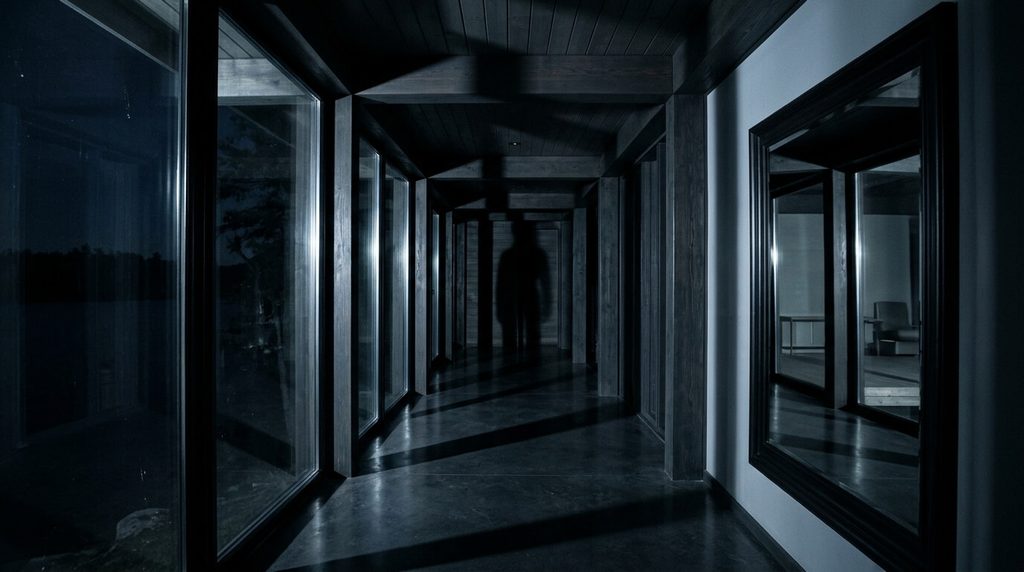
Following the sudden suicide of her husband, schoolteacher Beth (Rebecca Hall) is left alone in the lakeside home he designed for her. Soon, she uncovers blueprints of an inverted, mirrored version of their house and disturbing photographs of women who look identical to her.
Director David Bruckner masterfully uses architectural optical illusions—tricking the viewer’s eye into seeing figures hidden in the wood beams and door frames. As documented on IMDb’s production trivia, these practical visual tricks immerse you in Beth’s dizzying confrontation with nothingness.
6. Leave the World Behind (Netflix)
Adapted from Rumaan Alam’s bestseller, this apocalyptic thriller strips away standard disaster movie tropes like explosions and citywide battles. Two families are forced together in an upscale Long Island rental home when a cyberattack cripples nationwide communications, navigation, and power grids.
The tension hinges entirely on social friction and technological blindness. What happens when the devices keeping modern civilization sane abruptly stop working? The movie explores tribalism, disinformation, and the crushing helplessness of not knowing who is attacking you.
7. Resurrection (Hulu)
Featuring a career-defining monologue by Rebecca Hall, Resurrection explores the terrifying return of a former abuser. Margaret has built a spotless, highly disciplined corporate life for herself and her teenage daughter. When an older man from her past named David (played with chilling calm by Tim Roth) appears across a conference room, Margaret’s carefully constructed world implodes.
The film refuses to wink at the audience. It presents an unbelievable, grotesque psychological hold with deadpan realism, proving that psychological control can be far more vicious than physical violence.
8. The Platform (Netflix)
This Spanish dystopian thriller (originally titled El Hoyo) turns class inequality into a vertical, brutal nightmare. In a tower-style prison, a concrete platform filled with lavish food descends from the top level once a day. The people at the top gorge themselves, while inmates on lower floors starve or turn savage.
Despite being made on an economical budget, according to data on Box Office Mojo and global streaming charts, the film became an international phenomenon. Its claustrophobic dread stems from human nature itself—the quiet dread of knowing that comfort at the top requires suffering at the bottom.
Streaming Breakdown & Dread Ranking
| Title / Scene / Clue | Platform / Timestamp | Deeper Meaning / Vibe | Our Verdict / Impact |
|---|---|---|---|
| The Lodge The attic dollhouse sequence | Hulu 00:48:20 | Loss of autonomy, religious trauma trapped in miniature | Suffocating, bleak winter dread (9/10) |
| I’m Thinking of Ending Things The car ride monologue | Netflix 00:18:45 | Unraveling identity, projection of unfulfilled dreams | Hypnotic, dream-like alienation (8.5/10) |
| Saint Maud The beach walk revelation | Hulu 01:14:10 | Psychosis disguised as divine sanctification | Devastating emotional crash (9.5/10) |
| The Night House The negative space optical illusion | Hulu 00:39:15 | Grief as an active, predatory void | Visually genius paranoia (9/10) |
| Creep The door blocking sequence | Netflix 00:52:30 | Social politeness weaponized by a stalker | Unbearably tense cringe-horror (8/10) |
Hidden Clues & Original Perspectives You Probably Missed
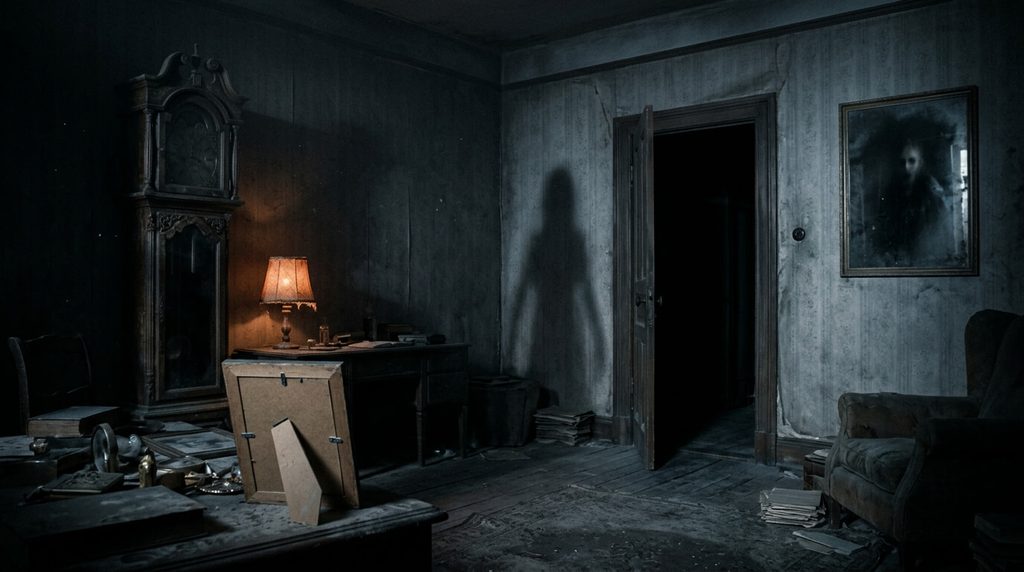
Cerebral horror films pack subtle details into backgrounds that most viewers miss on a first watch. Here are three critical clues that change the entire meaning of these films:
- The Wardrobe Color Shifts in I’m Thinking of Ending Things: Notice the Young Woman’s sweater and name change throughout the film. Her sweater shifts from bright orange to dull maroon as the janitor’s real-world memories fade, confirming she is not a real person, but a composite construct of women he once glimpsed.
- The Negative Space Architecture in The Night House: Keep your eyes locked on the gaps between bookshelves and staircases. The entity ‘Nothing’ is visible in broad daylight as an optical illusion formed by door frames minutes before Beth ever notices it.
- The Ticking Clock Motif in The Lodge: Listen closely when the calendar flips forward. The sound design replaces natural wind noises with the mechanical click of an industrial timer, foreshadowing the cruel, orchestrated nature of the children’s psychological experiment.
For more deep-dive analyses and cinematic hidden clues, explore our full library of guides at MR Digital Media.
Frequently Asked Questions
Why are jump scares considered cheap by many horror fans?
Jump scares rely on involuntary biological reflexes—loud noises and quick movements. They require little narrative buildup and wear off in seconds. Psychological horror requires disciplined storytelling, pacing, and sound design to sustain tension for two hours.
Which movie on this list is best for beginners to psychological horror?
The Night House on Hulu is an ideal gateway film. It combines compelling mystery, accessible pacing, and breathtaking visual tricks without becoming overwhelmingly avant-garde or stomach-churning.
Do any of these films contain graphic gore?
While The Platform and Saint Maud feature brief moments of intense physical violence, none of these selections rely on gratuitous slasher gore. The terror is rooted in mental, emotional, and spiritual ruin.
Final Thoughts
If you want movies that respect your time and genuinely get under your skin, step away from the predictable haunted house franchises. Dim the lights, put your phone in another room, and pick one of these slow-burn psychological nightmares on Netflix or Hulu.
Which movie on this list gave you the deepest sense of lingering dread? Drop a comment below and let us know your favorite jump-scare-free horror recommendations!