
If you finished watching Kevin Ko’s Taiwanese blockbuster and immediately felt an icy knot form in your stomach, you are not alone. The short answer to what happens if you memorized the curse symbol and chant: you were weaponized as a biological meat-shield to dilute a malevolent deity’s curse and save a little girl named Dodo. You did not just watch a movie; you actively participated in a supernatural chain letter designed to transfer lethal spiritual debt onto your shoulders.
By the time the credits roll on Netflix, director Kevin Ko flips the entire premise of found-footage cinema on its head. The protagonist, Li Ronan, spent two hours grooming you into a willing spiritual sacrifice.
What You Need to Know
- The Entire Film Is a Trap: Ronan is not recording a touching mother-daughter rescue log; she is executing a mass spiritual contagion across thousands of viewers.
- The Chant’s True Meaning: The phrase “Hou-ho-xiu-yi, si-sei-wu-ma” does not bring blessings. It translates to: “I offer my name to share the curse.”
- The Mother-Buddha Mechanism: The deity thrives on consciousness. By chanting, learning the hand sigil, and looking directly into the covered face, you accept a fraction of Dodo’s fatal affliction.
- Ronan’s Ultimate Sacrifice: Ronan blinds herself to unveil the deity’s face to the camera, dying horribly so the remaining curse disperses globally rather than killing her daughter.
The Found-Footage Gaslight: Ronan’s True Motive
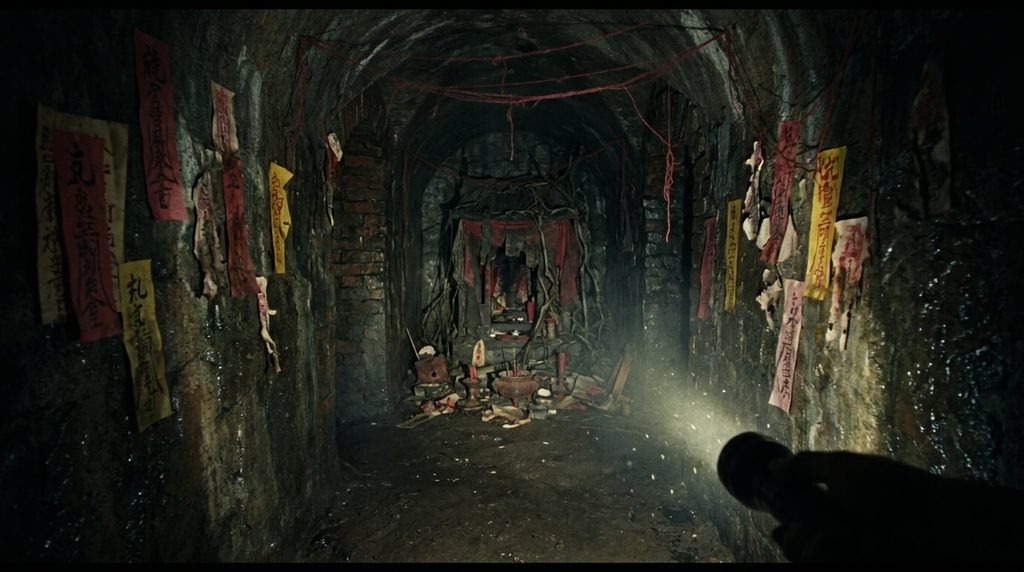
For the vast majority of the runtime, Incantation poses as a frantic redemption arc. We watch Ronan recover from severe psychiatric institutionalization to regain custody of her daughter, Dodo. Strange paranormal events begin ripping their apartment apart, from spontaneous glass shatterings to swarms of teeth-eating parasites.
Viewers instinctively root for Ronan because she frames her vlog as an interactive prayer. She teaches us an intricate hand mudra, projects an optical illusion asking us to alter the rotation of a ferris wheel with our minds, and urges us to memorize the sacred incantation. She claims our combined intentionality will manifest good fortune.
It is all a calculated lie. Much like the horrifying reveal in the subterranean climax of The Borderlands Final Prayer Ending Explained, Ronan leverages cinematic perspective to lead both herself and the audience straight into an ancient spiritual meat grinder.
| Title / Scene / Clue | Platform / Timestamp | Deeper Meaning / Vibe | Our Verdict / Impact |
|---|---|---|---|
| The Ferris Wheel Optical Illusion | Netflix / 00:03:15 | Proves human intention can manipulate perception and invite evil. | Psychological hook that primes viewer compliance. |
| The Forbidden Clan Tunnel Entrance | Netflix / 00:46:10 | Desecration of Yunnan clan taboos by modern arrogant ghost-hunters. | Foundational sin that triggers the multi-generational blood debt. |
| Ming’s Audio Restoration Lab | Netflix / 01:18:42 | Auditory curse transmission driving an innocent ally to head-bashing suicide. | Confirms listening alone is sufficient for fatal possession. |
| Unveiling the Deity’s Faceless Altar | Netflix / 01:42:05 | Direct visual transference of the entity’s core malevolence via camera lens. | Masterclass in Fourth-Wall breaking horror dread. |
What Happened in the Tunnel Six Years Earlier?
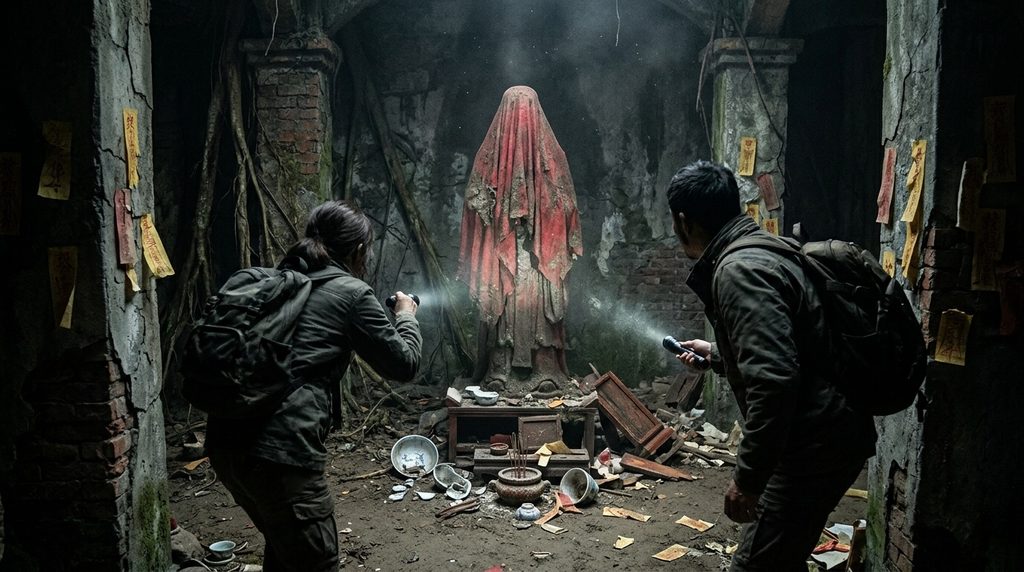
Six years prior, Ronan, her boyfriend Dom, and his brother Yuan ran an urban exploration vlog channel titled “Ghost Busters.” They attended a secretive clan gathering in a secluded village run by Dom’s extended family. The clan worships a deity referred to as the Mother-Buddha (Da-hei Fo-mu), an esoteric, corrupt deity derived from twisted Tantric traditions.
The clan survives not by eliminating the curse, but by managing its equilibrium. They bind the deity inside a subterranean tunnel lined with mirrors, talismans, and offering dishes filled with human teeth. The golden rule is absolute: never enter the tunnel, never ask for a name, and never look upon the face of the deity.
Driven by views and adolescent arrogance, Dom and Yuan violate the sanctum. Dom destroys the protective offerings, kicks open the inner altar doors, and gazes directly into the face beneath the red veil. Dom dies instantly from violent involuntary spasms, while Yuan flees the tunnel screaming before mutilating himself. Ronan escapes, but because she committed Dodo’s name to the entity while pregnant, her unborn child inherited the debt.
The Mechanics of the Mother-Buddha Curse
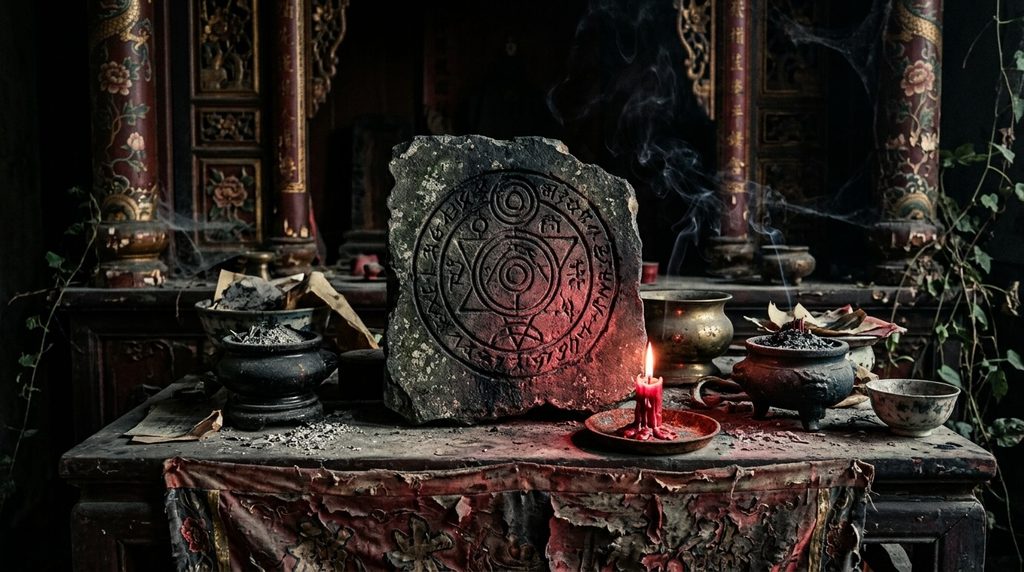
Unlike standard cinematic demons that possess souls to cause random chaos, the Mother-Buddha operates under cold, mathematical rules of spiritual distribution. Think of the curse like radioactive fallout: if one person absorbs 1,000 rems, they die instantly. If 100,000 people absorb 0.01 rems each, everybody survives with mild nausea.
According to cultural reception documented across Wikipedia and Asian horror forums, the Mother-Buddha’s signature attack involves dental rot, bodily parasites, involuntary self-harm, and the unyielding urge to repeatedly smash one’s forehead against hard surfaces. If this sensory horror reminds you of the terrifying rules in Latin American supernatural lore, revisit our breakdown of When Evil Lurks Ending Explained.
- Weaponizes the viewer’s natural empathy against them in a brilliant third-act rug-pull.
- Uses genuine folk religion aesthetics and claustrophobic sound design to induce physical unease.
- Makes the found-footage framing device essential to the monster’s narrative survival.
- Heavy trypophobia triggers featuring rotting flesh, insects, and holes packed with loose human teeth.
- Intense depiction of child suffering and severe self-mutilation that may disturb sensitive viewers.
Hidden Clues & Original Perspective
Director Kevin Ko packed subtle narrative breadcrumbs into the background that reward close rewatching. These details showcase how meticulously Ronan prepared her trap:
1. The Subliminal Text Inversions
Throughout the film, Ronan frequently flashes decorative red title cards with traditional blessing characters. Slow down the footage at the 1:12:00 mark, and you will see the Chinese characters are inverted and mirrored. In East Asian esoteric ritual, inverted characters signify an invitation to wandering spirits, hungry ghosts, and demonic debts rather than auspicious wards.
2. Ming’s Audio Equipment Calibration
When Ming attempts to clean up the damaged video cassette inside his audio suite, the decibel monitor repeatedly spikes into unreadable harmonic frequencies. This mirrors real-world EVP research cataloged on IMDb trivia logs. Ming dies not because he saw the footage, but because his brain processed the unvarnished frequencies of the Mother-Buddha chant. Like the atmospheric terror explored in our guide to 7 Disturbing Found-Footage Tubi Movies, auditory contagion is just as lethal as visual exposure.
3. The Red Altar Meat
In the village sequence, the elders eat raw meat offered on wooden platters. Close examination reveals this is not livestock meat; it is seasoned tongue and cheek muscle harvested from deceased cult elders. The clan sustains communion with the Mother-Buddha by consuming the anatomical instruments used to speak her forbidden name.
What Actually Happens If You Chanted Along?
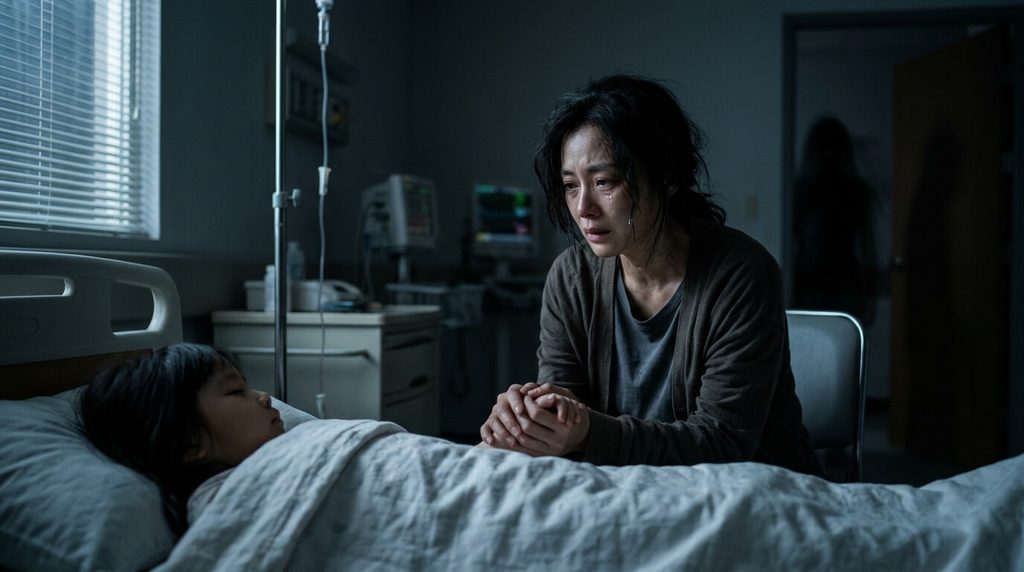
Let’s address the superstition head-on. Did Kevin Ko just put a real-world hex on millions of households across North America? The viral panic surrounding the film reached such a fever pitch that audiences flocked to Rotten Tomatoes to discuss whether the incantation was an actual ancient curse.
Here is the reality: The chant, the Mother-Buddha, and the hand sigil are entirely fictional. Kevin Ko and his writing team invented the deity and linguistic syntax from scratch. They based the rituals on composite elements of Southeast Asian folk occultism, Tantric mysticism, and Chinese animism, but there is no historic “Da-hei Fo-mu” deity harboring this specific incantation.
However, from a purely narrative perspective, if you existed inside the universe of the film and repeated the words, you just assumed a sliver of Dodo’s death sentence. Ronan succeeded. Dodo wakes up healthy in a hospital bed eating strawberry shaved ice, while thousands of global viewers carry the phantom burden.
Frequently Asked Questions
Is Incantation based on a true story?
Yes, loosely. The film was inspired by a bizarre 2005 incident in Kaohsiung, Taiwan, where a family of six claimed to be possessed by various folk deities. They engaged in extreme self-harm, stopped eating food, consumed bodily waste, and attacked each other with burning joss sticks, ultimately resulting in the tragic death of the eldest daughter.
Did Dodo survive at the end of Incantation?
Yes. The final video snippet shows Dodo recovering in hospital care, fully stabilized and free of the skin lesions. Ronan’s horrific plot worked: by dispersing the curse across the internet audience and blinding herself before facing the Mother-Buddha, she diverted the fatal spiritual debt away from her child.
Why did Ronan bang her head on the altar?
Once Ronan revealed the uncovered face of the Mother-Buddha to the camera lens, she had fulfilled her cosmic bargain. The deity consumes the life-force of whoever acts as the catalyst. The violent, rhythmic head-smashing is the physical trademark of the Mother-Buddha taking possession and claiming its sacrificial toll.
Final Thoughts
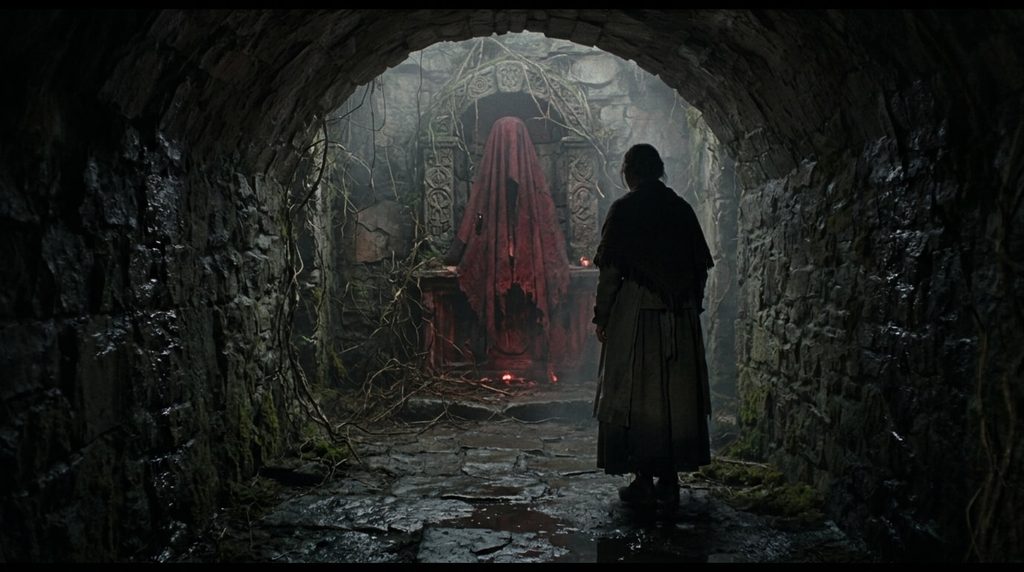
Incantation stands tall as one of the most mechanically inventive found-footage horror films of the 2020s. By breaking the fourth wall and turning the viewer’s screen into an active spiritual vector, it achieves a lingering psychological dread that few American horror films dare to execute.
Did you chant along with Ronan during your first viewing, or did your survival instincts tell you to keep your mouth shut? Drop your thoughts in the comments below!