
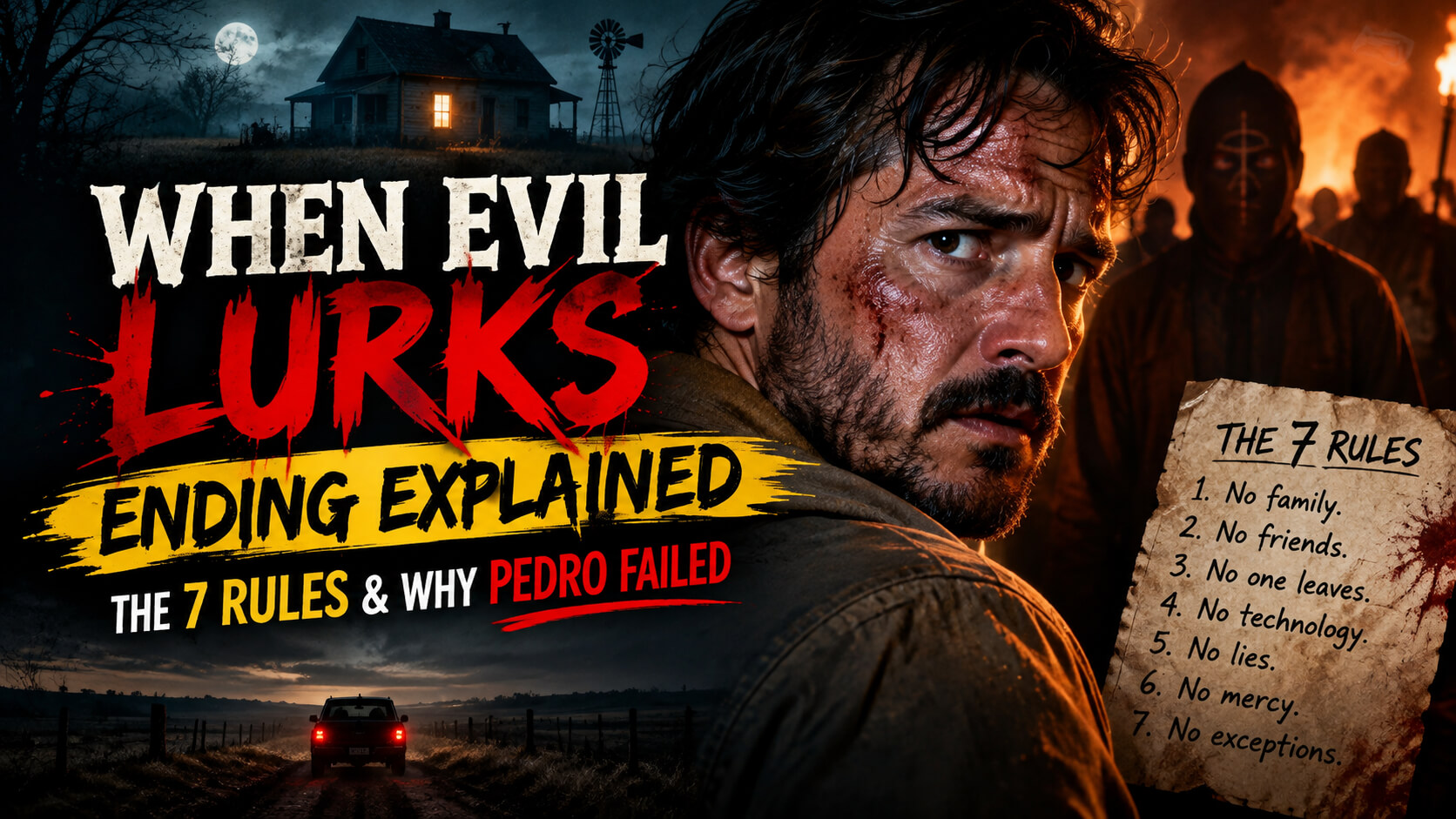
If the final moments of Demián Rugna’s rural Argentine nightmare left you staring at your screen in pure despair, you are not alone. The When Evil Lurks ending explained simply boils down to this: the demon successfully orchestrated its birth because Pedro broke every single survival protocol established to stop “the Rotten.” By bringing a gun into the schoolhouse, trusting possessed children, and acting out of panic rather than discipline, Pedro delivered the evil exactly what it needed to walk the Earth in physical form.
What You Need to Know
- The Core Trap: The demon didn’t succeed through superhuman strength; it used human panic and guilt as weapons to orchestrate its own immaculate demonic birth.
- The 7 Sacred Rules: Ancient protocols forbid electric lights, firearms, harming possessed people directly, and leaving loved ones behind—all of which Pedro shattered.
- The Schoolhouse Disaster: Mirta was right about the demon using children as shields, but Pedro’s impatience killed the only “Cleaner” equipped to stop it.
- The Haunting Final Scene: Jair spitting up apple seeds proves that Pedro’s survival is his ultimate punishment: living in a contaminated world where he killed his own bloodline.
The Mythos: What Is a “Rotten” (El Encarnado)?
Unlike standard Hollywood possession films where a priest performs a Latin ritual over a levitating teenager, Demián Rugna builds a post-religious world. According to critical consensus on Rotten Tomatoes, this grounded worldbuilding is why the film hit horror fans like a freight train. In this universe, God has abandoned humanity, churches are dead relics, and demonic infestation functions like an airborne pathogen combined with psychological warfare.
When someone becomes “The Rotten” (El Encarnado), they swell into an oozing incubator. Their body is merely a vessel preparing to give birth to evil incarnate. The government treats outbreaks like hazardous waste, but municipal apathy and bureaucratic rot leave rural outposts entirely defenseless. If you loved the oppressive dread in our deep dive into the The Borderlands Final Prayer ending explained, you will recognize the terrifying sensation of human insignificance on display here.
The 7 Rules of Demonic Containment Explained
Early in the film, Mirta—a former “Cleaner” (exorcist)—lays out the strict institutional doctrine required to survive an outbreak. Knowing these rules is crucial to understanding why Pedro’s journey turns into a masterclass in catastrophic failure.
- Do Not Use Electric Lights: Artificial light attracts and feeds the demonic entity, altering its perception of space.
- Stay Away from Animals: Livestock and pets possess low cognitive resistance, making them instant vectors for possession.
- Do Not Take Anything Near Them: Possessions and physical objects carry lingering contagion that binds to humans.
- Do Not Hurt Them: Injuring or shooting an infected host allows the demon to migrate instantly to the nearest living soul.
- Never Speak the Demon’s Name: Naming the evil gives it jurisdiction and psychological leverage over the speaker.
- Do Not Use Firearms: Guns are weapons of instant kinetic trauma; gunpowder and bullet discharges trigger immediate spiritual dispersion.
- Never Trust What Seems Familiar: The entity weaponizes emotional bonds, imitating children or loved ones to lure survivors into physical contact.
Much like the intricate cosmic rules unpacked in our breakdown of Hereditary Easter eggs, every rule in Rugna’s film is an active plot device rather than background flavor.
Why Pedro Failed: A Step-by-Step Breakdown of His Mistakes
Pedro isn’t stupid, but he is fundamentally governed by pride, grief, and terror. His actions demonstrate how unchecked emotional trauma renders people completely vulnerable to supernatural manipulation. Fans discussing the film on IMDb frequently point out that Pedro is the architect of his own damnation.
| Rule Broken | Key Scene / Choice | Immediate Consequence | Impact on the Ending |
|---|---|---|---|
| Moving the Host | Dumping Uriel’s body from the truck | Spreads the miasma across the entire district | Initiates the irreversible regional quarantine failure |
| Bringing Contraband | Wearing clothes soaked in Uriel’s fluids | Infects the family dog at his ex-wife’s home | Leads directly to the horrific dog attack on his daughter |
| Discharging Firearms | Firing the rifle inside the schoolhouse | Destroys Mirta’s protective containment field | Allows the possessed schoolchildren to murder Mirta |
| Falling for Familiarity | Believing Jair has recovered | Leaves his autistic son unattended | Jair consumes his own grandmother off-screen |
- Subverts classic American possession tropes by eliminating religious hope.
- Practical body horror effects convey a visceral, tactile sense of decay.
- Treats evil as an inescapable social contagion rather than an isolated haunting.
- Contains extreme, graphic violence involving domestic animals and children.
- The bleak narrative offers zero catharsis or traditional Hollywood redemption.
The Ending Scene: What Happened in the Schoolhouse?
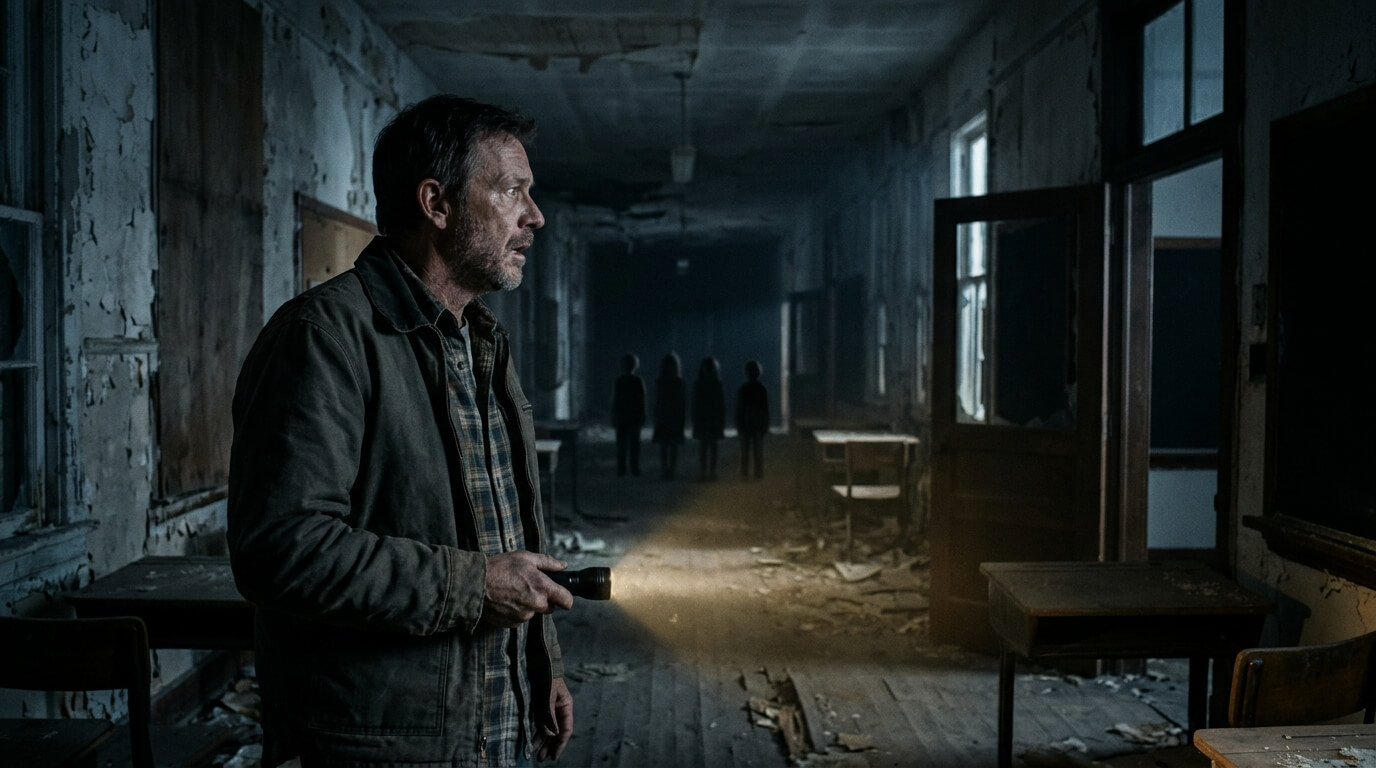
The third act inside the abandoned rural school is a masterwork in tension. Mirta constructs an apparatus designed to extract and execute the demon without using kinetic weaponry. To kill a demon cleanly, you need patience, custom instruments, and zero interference. But Pedro abandons Mirta the second he hears strange whispers.
Underneath the floorboards, Pedro discovers the school children hiding an impossibly swollen, naked demon child. Instead of waiting for Mirta, Pedro succumbs to panic. He attacks the structure, enabling the corrupted children to ambush Mirta with hammers and axes. In his final, fatal mistake, Pedro tries to strike the newborn demon with an axe, but the blow merely cuts the umbilical seal. The newborn emerges fully formed, glowing, and untouchable. For more indie horror gems streaming right now, check out the titles cataloged on Shudder or browse our rundown of terrifying hidden horror movies on Tubi.
Hidden Clues & Original Perspective: The Apple Seeds & Institutional Rot
While most analyses focus exclusively on the gore, three subtle narrative details unlock the movie’s deeper commentary:
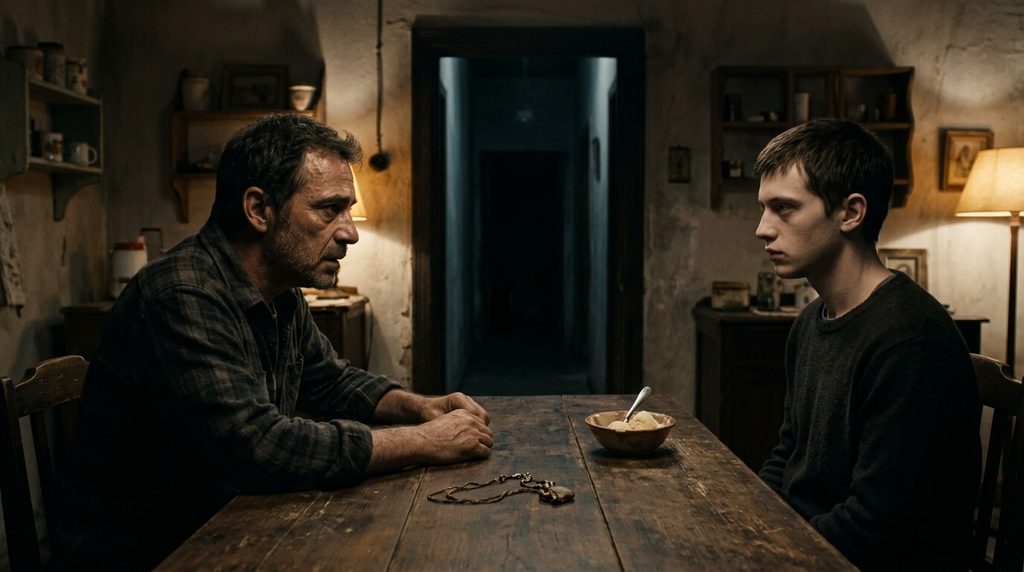
- The Apple Seeds Symbolism: In the final shot, Jair coughs up apple seeds alongside his grandmother’s hair. This Bible allusion points directly to original sin and the Garden of Eden. The demon did not just possess Jair; it planted the seed of evil inside him to harvest in future generations.
- Government Cover-Up Logistics: As noted on the film’s production notes via Wikipedia, Rugna wrote the script during agricultural protests in Argentina. The corrupt landowners and indifferent police mirror how pesticide poisoning and ecological disaster are handled in modern South America.
- Autism as an Infiltration Vector: The demon targets Jair specifically because his neurodivergence causes his family to misinterpret warning signs. Pedro assumes Jair’s sudden verbal coherence is a miracle, failing to realize it is the demon pulling his strings. This subversion of parental hope mirrors the psychological traps seen in our Oddity ending explained.
Frequently Asked Questions
Did Pedro die at the end of When Evil Lurks?
No, Pedro survives, which is the most cruel outcome possible. The demon leaves him alive intentionally. Pedro is forced to live in absolute isolation, knowing that his impatience and defiance directly caused the deaths of his ex-wife, his children, his mother, and his neighbor.
Why did Jair eat his grandmother?
Jair was fully possessed the moment Pedro returned to the homestead. The entity consumed the grandmother as an act of absolute psychological annihilation against Pedro, symbolized by the hair and apple seeds Jair spits onto the table.
What does the newborn demon child represent?
The newborn child represents the arrival of a new era. In Rugna’s world, the birth marks the formal triumph of evil over humanity’s former spiritual safeguards. Evil is no longer lurking—it is officially walking in broad daylight.
Final Thoughts: The Cost of Impatience
When Evil Lurks succeeds because it treats its rules with stone-cold seriousness. Pedro did not lose because he was weak; he lost because he could not suppress his own ego and fear long enough to listen to the experts. The demon understood human frailty better than Pedro understood demonic lore.
Did Pedro stand a chance from the start, or was the infection impossible to stop once Uriel’s body was moved? Drop your thoughts in the comments below!