
Ari Aster’s 2018 masterwork Hereditary is not a standard ghost story about grief. The terrifying truth behind the film is that the Graham family never had a shred of free will; every single misfortune was an engineered ritual trap executed by the Cult of Paimon long before the opening credits rolled.
On a first watch, you experience the visceral shock of family tragedy. On a rewatch, you realize director Ari Aster planted the entire cult conspiracy right in front of your eyes across every frame, shadow, and piece of background decor. Here are 10 blink-and-you-miss-it Easter eggs that completely reframe the entire movie.
What You Need to Know
- The Graham family was marked and monitored by local cult members at every public event, including the opening funeral.
- Charlie was never an ordinary child; the demon King Paimon occupied her vessel from infancy until the cult engineered her decapitation.
- Demonic occult incantations like “Satony” and “Zazas” are visibly scrawled on the home’s baseboards and wallpaper throughout the film.
- The blue wandering orb of light is Paimon’s spiritual presence actively manipulating Peter and Annie toward their final doom.
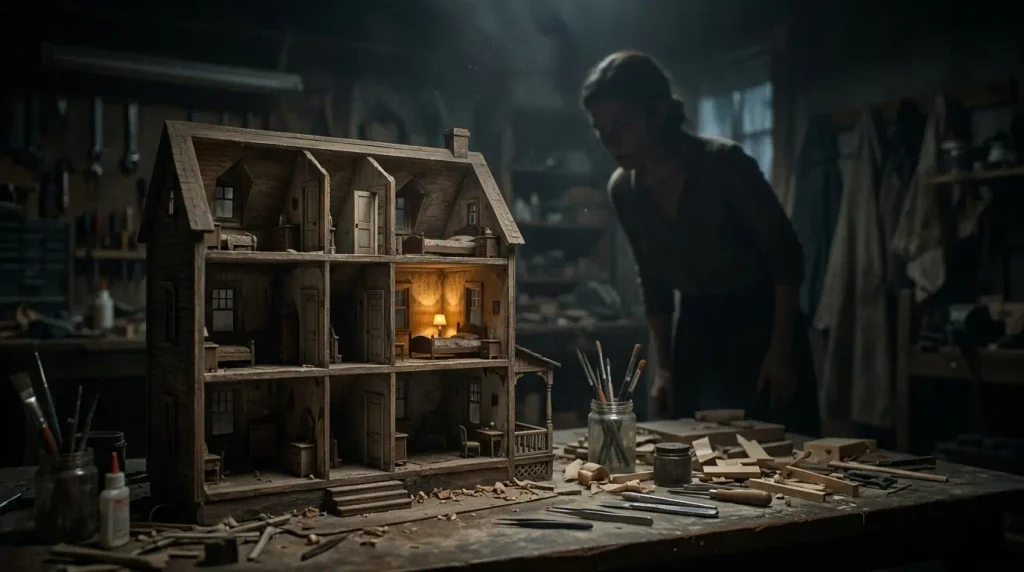
1. The Opening Dollhouse Transition Reveals the Trap
The very first shot of the film moves through Annie’s workshop, creeping toward an intricate miniature replica of Peter’s bedroom before seamlessly morphing into the real-life room. This visual trick is not just flashy directing. It establishes the central thesis of the story: the characters are miniature playthings manipulated by unseen giant hands.
Much like the tragic doomed protagonists we dissected in The Borderlands Final Prayer Ending Explained, Annie, Peter, and Steve are locked inside an inescapable maze designed by an external architect.
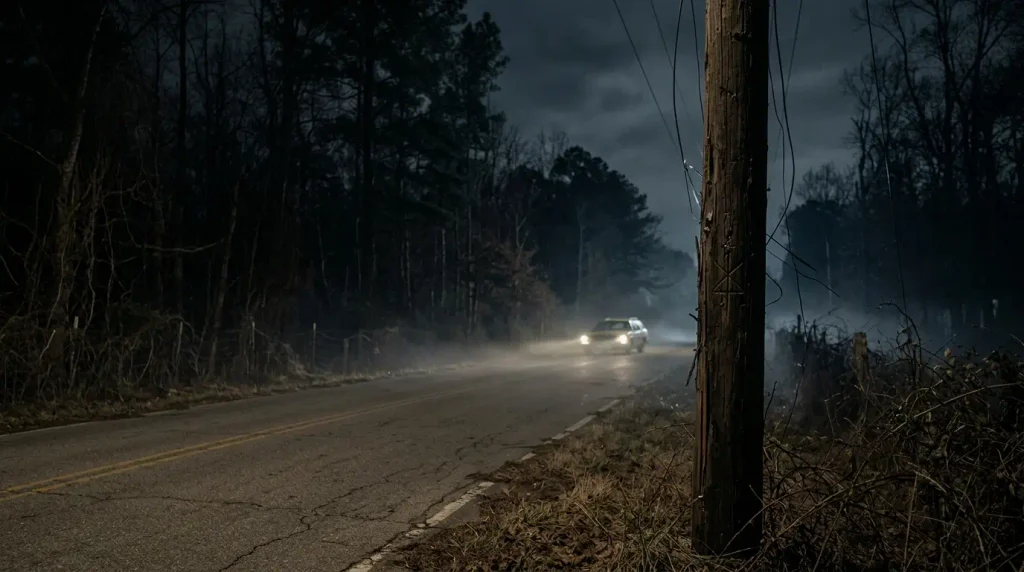
2. The Cult Sigil Carved on the Telephone Pole
Long before Charlie’s horrifying car ride, the Cult of Paimon was already marking the exact spot of her demise. If you pause right before Charlie loses her breath, the telephone pole Peter eventually swerves toward already has the golden Sigil of Paimon carved directly into the treated wood.
According to historical demonology texts chronicled on Wikipedia, Paimon requires a healthy male vessel. The cult placed the roadkill decoy and marked the exact pole to ensure Charlie’s physical body was severed precisely as planned.
3. The Chanted Words Carved Into the House Baseboards
As grief fractures the household, the camera glides past several walls inside the Graham home. If you look closely at the molding above the doorways and baseboards, specific Latin and Enochian words are carved into the wood: “SATONY”, “ZAZAS”, and “LIFTOACH PANDEMONIUM”.
These are not random graffiti. In ceremonial magic, “Liftoach Pandemonium” translates to “Open the gates of Hell,” while “Zazas” refers to the Opening of the Abyss. The cult was literally etching invocations inside the Graham residence to break down Annie’s psychic defenses.
4. Friendly Faces in the Funeral Crowd Are Cultists
During grandma Ellen’s funeral in the opening ten minutes, Annie notices strange attendees smiling at Charlie. When the camera pans across the mourning crowd, several of those smiling elderly figures reappear in the final ten minutes of the movie as naked cultists surrounding the treehouse.
Even the strange man who beams warmly at Charlie during the wake is seen later bowing down to Paimon. Horror fans who love uncovering subtle background figures will find similar dreadful storytelling in the Lake Mungo Hidden Ghosts Twist.
- Rewardingly complex rewatch value that deepens the dread.
- Aster replaces cheap jump scares with cold, calculated architectural doom.
- Subtle visual motifs align perfectly with real-world occult lore.
- Extremely disturbing themes of familial trauma, self-harm, and cult terror.
- Requires high brightness settings to spot several dark background details.
5. Charlie Was Always Paimon
Many viewers assume Charlie was an innocent girl whose soul was swapped after death. However, Aster confirmed in multiple interviews logged on IMDb that the human Charlie never existed independently. Paimon was summoned into her body at birth by Ellen.
This explains Charlie’s eccentric habits: her mechanical clicking tongue, her compulsion to construct crude idols from scavenged junk, and her complete detachment from normal social empathy. She was a demonic entity awkwardly occupying a female body while awaiting a suitable male host.
6. The Herbicide and Dittany in Joan’s Tea
When Joan invites Annie into her apartment, she prepares a special cup of tea. If you look at the dried herbs sitting on Joan’s counter, they match the strange black herbs Annie later finds inside her mother’s personal belongings: Dittany of Crete.
In classical occult rituals, burning or ingesting Dittany of Crete is believed to manifest spirits physically. Joan was literally intoxicating Annie with occult herbs to make her vulnerable to spiritual channeling, a detail celebrated in critic write-ups on Rotten Tomatoes.
7. Peter’s High School Class Foreshadows His Doom
During Peter’s high school English literature class, the teacher leads a discussion on Sophocles’ The Women of Trachis and Euripides’ Heracles. A student comments that the tragedy occurred because the characters had no agency and were merely pawns of the gods.
Another student argues that it is far more horrifying if the characters had no choice, because their hopes were hopeless illusions. This scene serves as Aster’s direct thesis statement to the audience: Peter’s fate was sealed by ancient powers, and his attempts to resist are completely meaningless.
8. The Red Welcome Mat Inversion
When Annie visits Joan’s apartment building, the camera rests briefly on Joan’s front door. Joan has a personalized welcome mat with the word “Welcome” stenciled across it. However, the mat is turned facing inward toward Joan’s apartment rather than out toward visitors.
This subtle orientation points out that the true guests being invited inside are spiritual entities, not human neighbors. Ritualistic space manipulation like this is a hallmark of occult cinema, echoing the basement rites analyzed in our Hell House LLC Ending Explained.
9. The Blue Light Trails Guide Every Death
Whenever a catastrophic event occurs, a dancing blue light orb slides across the walls or floors. You can track this entity moving across the wallpaper before Charlie’s fatal allergic attack, shimmering near Peter’s bedroom, and finally entering Peter’s corpse after he leaps from the attic window.
The orb represents King Paimon himself guiding events. Aster never relies on typical CGI monsters; he uses this elegant streak of light to show a demonic king pulling the strings with invisible puppet wires.
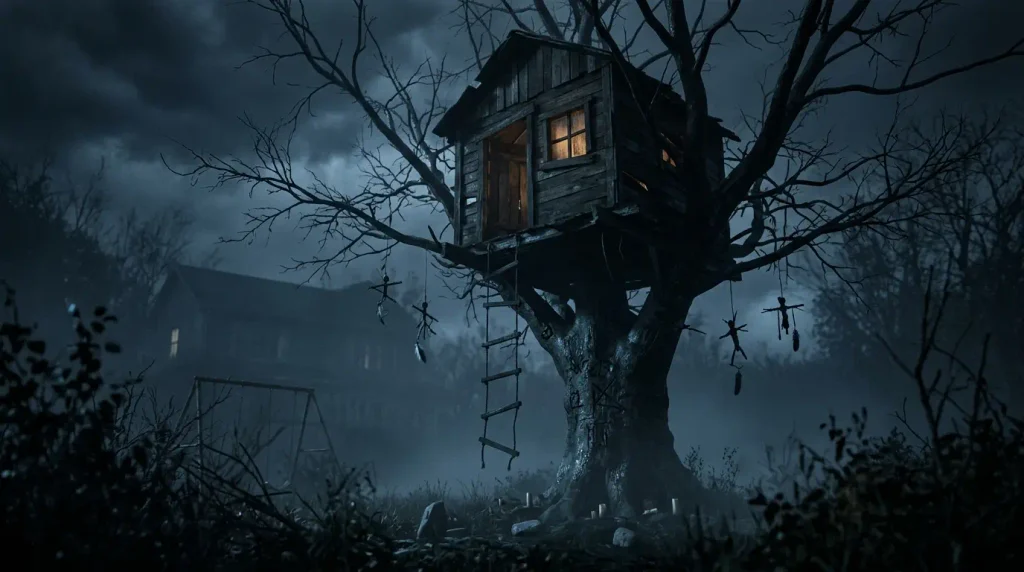
10. Naked Cultists Were Stalking the Yard for Days
If you turn up your monitor’s brightness during the wide exterior shots of the Graham home at night, you will spot terrifying figures. Naked cultists stand motionless among the tree line, watching the family sleep days before the chaotic finale.
The cult wasn’t rushing an impromptu plan; they had Steve, Annie, and Peter encircled around the clock. The horrifying realization that observers lurked in the dark all along turns quiet moments into heart-pounding terror.
| Easter Egg / Clue | Platform / Timestamp | Deeper Meaning / Vibe | Our Verdict / Impact |
|---|---|---|---|
| Sigil on the Pole | 00:27:14 (VOD / Blu-ray) | Predetermined ritual murder | Mind-bending rewatch payoff |
| Wall Inscriptions | 00:48:32 (VOD / Blu-ray) | Psychic breakdown of the home | Subtle atmospheric dread |
| Joan’s Chalkboard | 01:12:05 (VOD / Blu-ray) | Pre-written demonic script | Proves Annie was set up |
| Yard Cultists | 01:42:18 (VOD / Blu-ray) | Complete physical surveillance | Pure Nightmare fuel |
Hidden Clues & Original Perspective: 3 Details Most Fans Miss
Beyond the primary ten Easter eggs, Aster buried three astonishing production design nuances that reward only the most observant horror cinephiles streaming modern classics across platforms like Netflix and Tubi:
1. The Triangular Architecture Rule
Take note of the recurring triangles throughout the house. The attic stairs, the roof pitches, the layout of the dining table candles, and the placement of the three family members in wide shots continually form a three-point pyramid. In demonology, the triangle is the geometric shape used to compel a demon to manifest into physical reality.
2. The Pigeon Decapitation Parallels
Charlie cuts off the head of a dead pigeon using scissors early in the film. Later, Annie decapitates herself using a wire in the attic. The visual staging is an identical recreation: the posture, the downward angle, and the mechanical repetition mirror Charlie’s desk behavior perfectly.
3. Steve’s Red Light District of Doubt
Whenever Steve works in his office trying to anchor the family in rational reality, his desk lamp casts a warm red glow that clashes violently with the cool, demonic blue light invading the rest of the house. His commitment to skepticism blinded him to the supernatural siege taking place around his family until he caught fire.
Frequently Asked Questions About Hereditary
Was Charlie ever a normal human child?
No. Director Ari Aster has confirmed that Charlie’s spirit was displaced by King Paimon from the moment she took her first breath. Her awkward demeanor, fixation on trinkets, and clicking tongue were all behavioral quirks of the demon struggling to occupy a female vessel.
Why did the cult need Peter instead of Charlie?
According to ancient grimoires like the Lesser Key of Solomon, King Paimon prefers a male host. Ellen used Charlie as a temporary vessel because Annie kept Peter away from her during his early childhood. Once Peter grew into a young man, the cult executed Charlie to transfer the spirit into Peter.
What does the final treehouse scene mean?
The coronation in the treehouse represents the cult’s total victory. Paimon has successfully possessed Peter’s body, Ellen’s headless corpse has been honored alongside Charlie’s skull, and the remaining cult members kneel in worship before their newly incarnated earthly king.
Final Thoughts: The Inescapable Web of Ari Aster
What makes Hereditary stand as one of the best horror movies of the 21st century is that its scares are baked into the narrative mathematics. There are no sudden coincidences or lucky escapes. Every scene is an orderly step toward an inevitable demonic coronation.
Did you spot the naked cultists hiding in the trees on your first watch, or did it take a repeat viewing to see the full conspiracy? Drop your favorite hidden horror movie detail in the comments below!